

Loading
Discover the Secrets to MindBody Alignment. Download your FREE MindBody Blueprint NOW!
  • Shopping Cart Shopping Cart
    0Shopping Cart
BodyLogos
  • ABOUT
    • The BodyLogos Story
    • SPEAKING
    • MEDIA
    • FAQ’s
    • TESTIMONALS
    • CONTACT
  • BOOKS
    • THE ART OF STRENGTH
    • RADIANT WISDOM
  • PROGRAMS
    • The Mind Body Adventure App
    • Correct the Computer Crunch
  • WORKOUTS
    • Personal Training & Downloads
  • RITUALS
    • Holistic Treatments
    • WiseBeauty Products
  • BLOG
  • Click to open the search input field Click to open the search input field Search
  • Menu Menu

Is It Tao or Dao?

by Tammy Wise

Is it Tao te Ching or Dao de Jing? The spelling of Chinese words is confusing and inconsistent. Here’s an explanation.

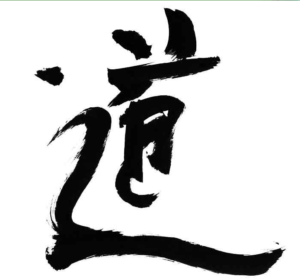
Chinese writing consists of simplified images called pictograms, which represent words. Many Chinese pictograms combine two or more images. So the word for forest is simply a few trees combined into one pictogram. The choices within a pictogram can say a lot more about a word than what Western letters communicate.

A good example of this is the word Tao, the Way (seen above). It combines the image of taking a step and that of a head. You walk using your head – both when choosing a direction and in learning from the walk. One could say that it’s a way for mind and body to align. A spiritual path, if you will.

Pictograms illustrate the meaning of a word while analyzing the history and origin of the word. But it doesn’t help much in pronunciation or spelling.

The Western alphabet is all about pronunciation. In Western language, there is pretty much a consensus about how each letter is pronounced. Chinese pronunciation isn’t based on the Western letters and their sounds; in fact, the Chinese have sounds that differ slightly from the ones we are accustomed to. Again, Tao is a good example.

The sound for “T” is pronounced somewhere between a “T” and a “D” in our ears, somewhere between the unvoiced and voiced consonant. It was translated as “Tao” in the late 19th/early 20th centuries using a Romanization system called Wade-Giles. “Dao” was later transcribed into the Western alphabet using a Chinese adaptation called Pinyin.

The “unvoiced T––voiced D” is far from the only difference in transcriptions. Here are other differences in Tao’s transmutation:

Wade-Giles

Tao te Ching

Lao Tzu

Chi

I ching

T’ai chi   

Pinyin 

Dao de Jing

Lao zi

Qi

Yi jing

Taiji

English

Scripture of the Way

Founder of Taoism

Energy

Book of changes

Great art of boxing

And the list continues.

The mystery of pictograms lives on.


Share this entry
  • Share on Facebook
  • Share on X
  • Share on WhatsApp
  • Share on LinkedIn
  • Share by Mail
https://bodylogos.com/wp-content/uploads/2019/03/TaoPictogram.png 655 703 Tammy Wise https://bodylogos.com/wp-content/uploads/2021/12/Tammy-WIse-.png Tammy Wise2019-03-26 16:37:302020-03-24 11:53:51Is It Tao or Dao?
0 replies

Leave a Reply

Want to join the discussion?
Feel free to contribute!

Leave a Reply Cancel reply

Your email address will not be published. Required fields are marked *

Welcome to the BodyLogos blog. Here’s where you’ll get your dose of alignment and balance with grace. (Sign up here to join 1,000 other blog subscribers.)

Recent Posts

  • Faith and Fear are both Unknowns
  • What Marriage Means to Me
  • Two Realities, One Life
  • Untethered Through the Holiday
  • Tough-Love to Self-Love
  • A Love Letter’s Passage
  • New Year’s in July
  • Cancer is Never Nothing
  • Passion Project or Purpose Project?
  • Empathy has No Agenda, only Love
Copyright © 2026 - BodyLogos Fitness, Wellness and Beauty - Photo Credit: Steve Friedman - Video Credit: 3DStarStudios
  • Link to X
  • Link to Facebook
  • Link to LinkedIn
  • Link to Instagram
Link to: Book Launch – A Dream Celebrated Link to: Book Launch – A Dream Celebrated Book Launch – A Dream Celebrated Link to: I’ve Mistaken Myself As My Book Link to: I’ve Mistaken Myself As My Book I’ve Mistaken Myself As My Book
Scroll to top Scroll to top Scroll to top